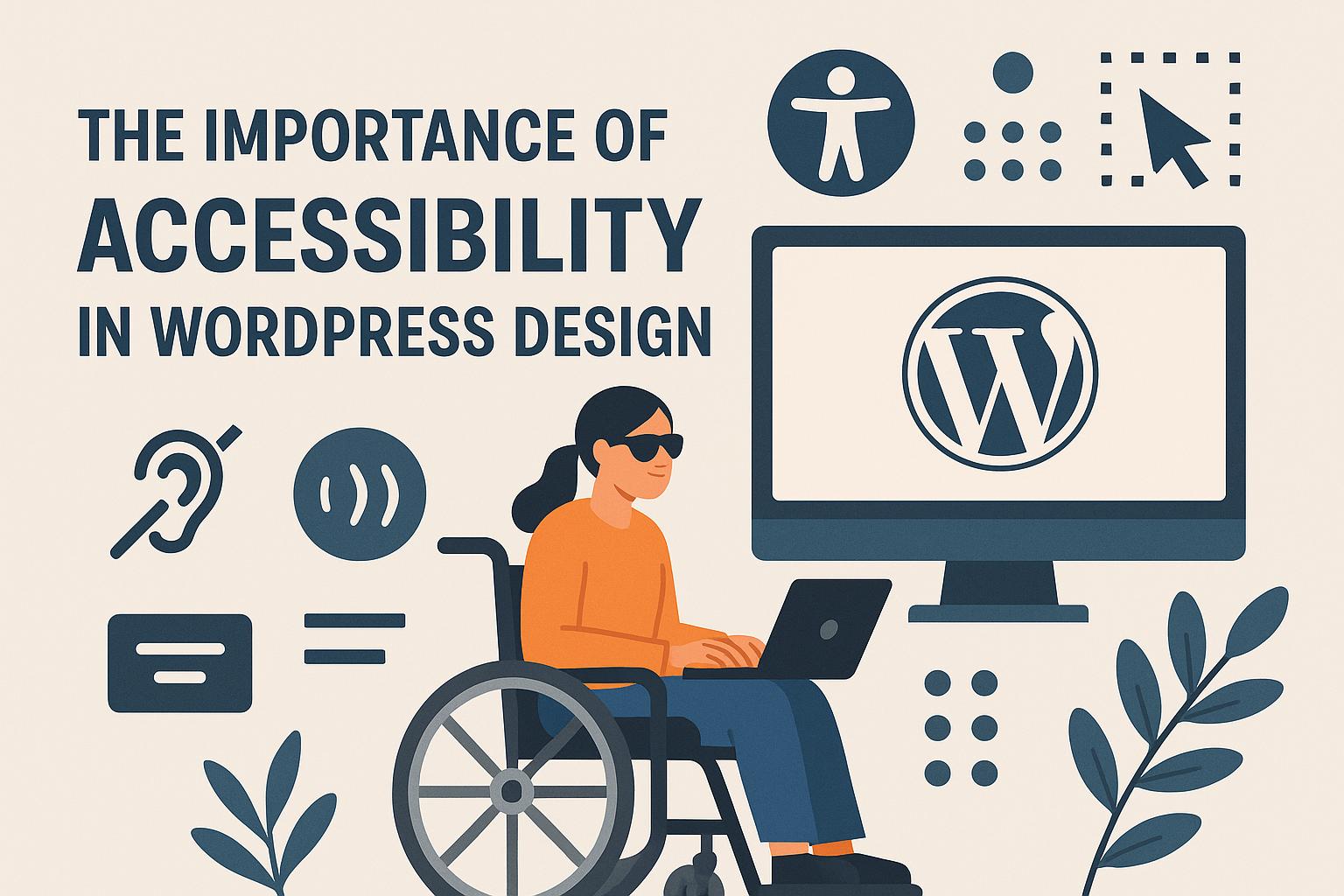
Understanding Accessibility in WordPress Design
The digital landscape, characterized by its vast and ever-evolving nature, is an arena where accessibility is paramount. Accessibility in WordPress design extends beyond an ideal to an essential practice, given WordPress’ substantial presence—powering nearly 40% of the global web. An accessible design transcends usability, fostering an inclusive environment that ensures content is reachable for diverse user groups, including individuals with disabilities. This inclusivity facilitates the dissemination of information to the widest audience possible, democratizing access and participation in the digital world.
Key Principles of Accessibility
To fully grasp the importance of accessibility within the context of WordPress, one must explore its foundational principles. These principles form a blueprint for accessible web design, guided by the Web Content Accessibility Guidelines (WCAG). These guidelines provide a thorough framework intended to enhance the accessibility of web content systematically.
Perceivability emerges as a critical principle, guaranteeing that users can perceive the information presented. All users must be able to comprehend content, whether through visual aids, auditory cues, or tactile feedback. On the other hand, Operability mandates that user interface components and navigation systems remain operable. This means ensuring that all users can interact with content through various means—whether it be through a keyboard, a mouse, or a screen reader.
Understandability is centered on ensuring that information, alongside the operational aspects of the UI, remains comprehensible to all users. The last principle, Robustness, refers to ensuring content can be interpreted consistently across an array of user agents, including assistive technologies like screen readers.
The Role of WordPress in Promoting Accessibility
WordPress, recognized for its versatility as a content management system, offers a suite of tools through themes and plugins that promote accessibility. Themes that align with accessibility-ready standards provide a robust infrastructure for crafting websites that accommodate people with disabilities. The WordPress community ceaselessly endeavors to improve its core platform by integrating features and tools crafted specifically for accessibility compliance.
Selecting themes and plugins that explicitly support accessibility standards is crucial. This selection not only adheres to optimal design practices but also conforms to legal accessibility requirements. Themes marked “accessibility ready” have passed stringent checks and thus provide a solid starting point for developers striving to create inclusive websites.
Legal Implications and Ethical Considerations
The legal and ethical dimensions of web design cannot be overemphasized. Multiple countries enforce legal regulations—such as the Americans with Disabilities Act (ADA) in the United States—that ensure accessibility in digital services. Non-compliance with these regulations can lead to legal ramifications, posing significant risks for businesses.
Beyond these legal considerations, embedding accessibility within WordPress design signifies an ethical commitment to equality. It reflects dedication to providing an inclusive online experience and acknowledges the responsibility of contributing positively to a rich, diverse, digital ecosystem. Inclusivity fosters innovation and creativity, resulting in a more universally accessible digital realm.
Promoting Inclusivity through Better Design
Inclusion in web design is pivotal for promoting accessibility. Implementing design features such as accurate alt text for images ensures that those using screen readers can interpret visual content. Using headings correctly not only organizes information logically on a page but is also crucial for screen readers to navigate content efficiently. Adequate color contrast assists users with visual impairments in distinguishing between different elements on a webpage, enhancing readability. Meanwhile, enabling keyboard navigation ensures that users who cannot use a mouse can still traverse a website intuitively and effectively.
These collective efforts forge a user-friendly, inclusive web environment where everyone has equitable access to information and digital services. Accessibility in WordPress design is not merely a compliance exercise—it’s an investment in the user experience, a recognition of legal mandates, and a reflection of ethical responsibility. Prioritizing these principles enables web developers and designers to contribute actively toward an internet that is more inclusive and accessible to everyone, regardless of ability or disability.
Inclusivity through accessibility is fundamentally intertwined with the larger goal of universal design—a design philosophy that anticipates the diversity of potential users and crafts experiences that accommodate a wide range of needs. By integrating accessibility into the core of WordPress design practices, developers foster an environment where adaptation is seamless, and where digital barriers are systematically dismantled, granting universal access.
As web developers and designers continue to explore the vast capabilities of WordPress, they bear the responsibility to keep accessibility at the forefront. This ensures that the digital frontier remains open and welcoming to all, reflecting a genuine commitment to equality and inclusivity. Through concerted and continuous efforts, the digital landscape can evolve into a truly accessible domain, ultimately embodying the principles of universal access and reflecting the best of shared human values in the digital age.